



Dryer Vent Cleaning — Stop Fires Before They Start
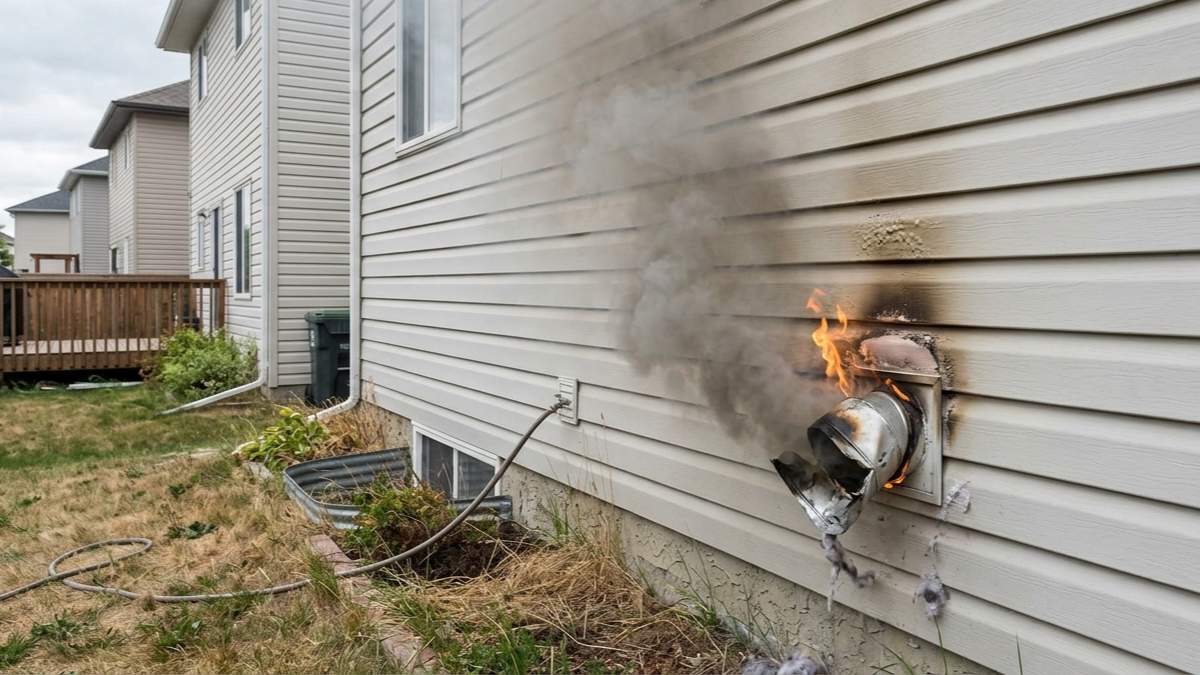
Clogged dryer vents cause roughly fifteen thousand home fires every year (NFPA). We clear the full run, check airflow, and give you a vent that's safer, faster, and longer-lasting.

Why Dryer Vent Cleaning Matters
The National Fire Protection Association attributes roughly fifteen thousand home dryer fires every year to clogged or failed vents — about a third of all dryer fires are tied directly to a failure to clean. Beyond fire risk, a clean vent dries clothes in one cycle, lowers the dryer's energy use, and extends its life. Most homes need a cleaning every one to two years; the majority of homes have never had one done. A Voyager cleaning covers the full vent run, not just the first few feet — and ends with an airflow check so you know the system is actually clear.
Most homes need this every 1–2 years. The majority have never had it done.
Repairs & Rebuilds
The Products We Trust on Your Vent
When a vent rebuild or repair is needed, the parts that go back in matter as much as the cleaning itself. These are the four we use because they earn it — in fire performance, airflow, and longevity.
Cleaning fixes today. The right parts keep it that way for the next decade.
The Data
Dryer Fires by the Numbers
Every number below is published by NFPA or USFA. Read them once and a one-to-two-year cleaning cadence starts making a lot of sense.
Home dryer fires every year in the United States.
NFPA
Of home dryer fires are caused by a failure to clean.
NFPA
Peak month for home dryer fires — cold-weather laundry loads push systems harder.
USFA
Estimated annual property damage from home dryer fires in the U.S.
NFPA
The Failure Mode
Anatomy of a Dryer Fire
Lint builds up along the vent run, and back-pressure traps heat inside the dryer itself. Five places along the path do the most damage. The diagram is the story.
Back-pressure at any one of these raises dryer drum temperatures into the ignition range. A full-run cleaning attacks all five.
A Quick Self-Check
Warning Signs Your Dryer Vent Needs Cleaning
The dryer usually tells you when the vent is overdue. Here's what to look (and listen) for.
Are clothes still damp after one cycle?
Is the dryer hot to the touch when it runs?
Do you smell something burning during a cycle?
Is there lint piling up around the outside vent hood?
Does the outside vent flap fail to open when the dryer runs?
Do clean clothes come out smelling musty or mildewed?
Have your energy bills climbed without an obvious reason?
Is excessive lint collecting on surfaces in your laundry room?
Does the laundry room feel hot and humid while the dryer is running?
Any of these and your vent is overdue. We'll inspect it for free.
What Code Requires
IRC M1502 and the 35-Foot Rule
The International Residential Code limits dryer vent length to 35 feet of equivalent run. Every fitting eats into that. Most homes are closer to the limit than they realize.
Equivalent Length — Straight Run + Fittings
10 ft + 5 ft (90°) + 10 ft + 2.5 ft (45°) + 7.5 ft = 35 ft
Over 35 ft equivalent? Code requires a listed booster fan (DEDPV).
Source: International Residential Code (IRC) M1502, Dryer Exhaust. Phenix City Code Section adopting 2021 IRC.
The Voyager Difference
Why Dryer Vent Cleaning Should Be Done by Specialists
Dryer vent cleaning isn't an add-on at Voyager. It's a core service done to the same standards as every other job we do.

Specialists, Not Generalists
We don't do dryer vents as an afterthought. They're a core service, performed to the same standards as our duct work, by the same NADCA-trained team.
The Full Vent Run, Not Just the First Few Feet
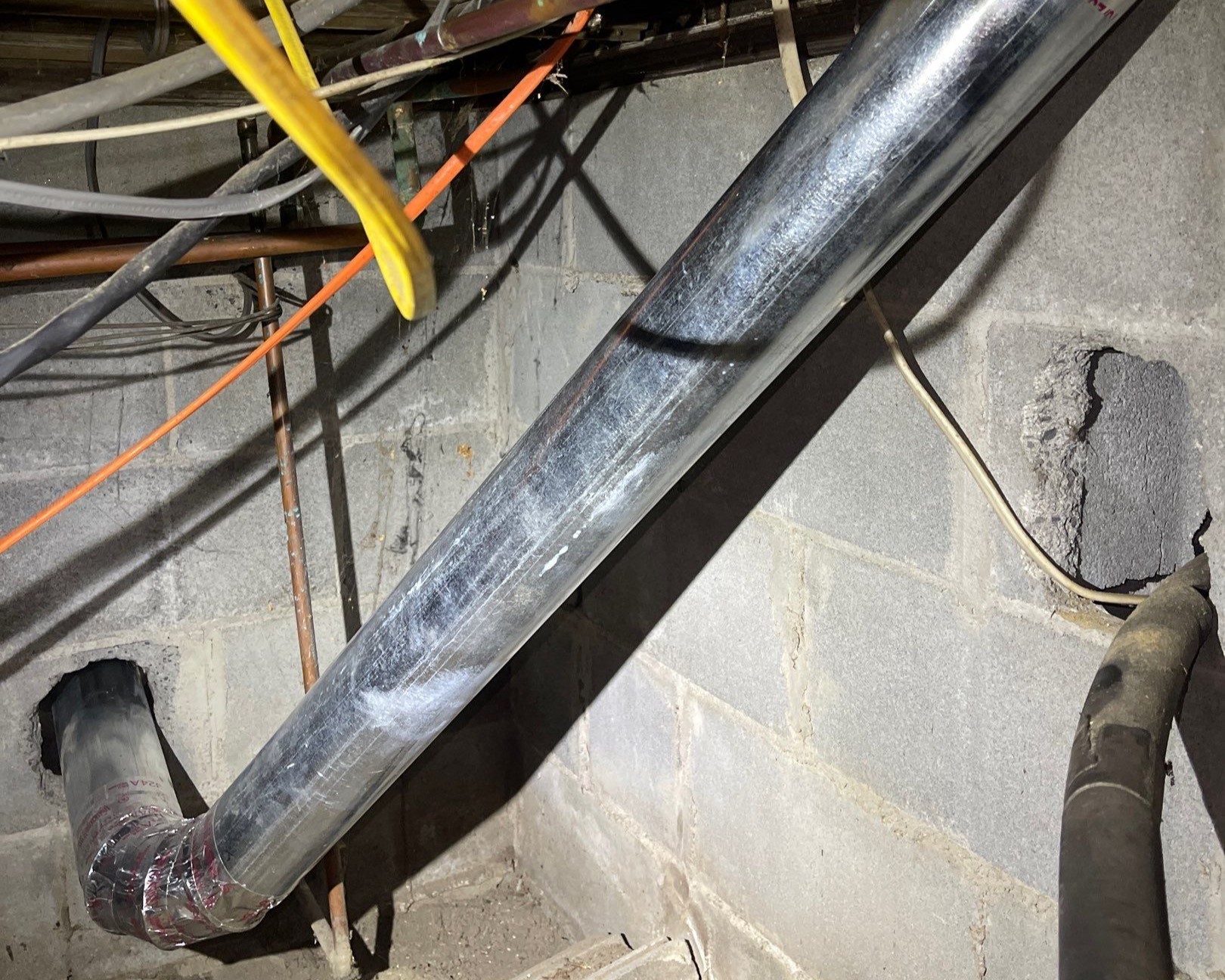
Many "dryer vent cleanings" stop at what's easily accessible. We clean the full run from the dryer to the exterior cap, including elbows, wall cavities, and roof exits.
Inspection, Cleaning, and a Clear Report
We inspect before and after, show you what we removed, run an airflow check to confirm the system is clear, and leave you with a clean record of what was done.
Our Methodology
How a Voyager Dryer Vent Cleaning Works
A four-point approach to every vent. Designed to find what's hidden in the run, clear it the right way, and leave you with confidence the system is actually safe.
Navigate
Assess the run and how it actually behaves.
We assess the vent run, the exterior cap, and how the dryer behaves during a cycle. Most problems hide in the parts you can't see.
Educate
Show you what we found and what it means.
We show you what we found — lint, debris, sometimes nests — and explain how it got there.
Service
Clear the full run, then verify with airflow.
Full-run cleaning using equipment matched to your vent's material and length, then an airflow test to confirm the system is actually clear.
Walk-Through
Leave you with confidence the work is done.
Before we leave, we share what we did, what to watch for, and when you should think about your next cleaning.
Discovery. Understanding. Resolution. Guidance. Every visit. Every home. Every time.
Not All Vent Materials Are Equal
What Your Vent Is Made Of Matters
The material running between your dryer and the exterior cap directly affects fire risk, airflow, and what cleaning equipment can safely be used. Green is best, yellow is acceptable, red doesn't belong in a wall.
| Material | IRC M1502 Compliant | Fire-Safe | Airflow | Durability |
|---|---|---|---|---|
| BestInOvate DryerFlex (Transition)UL 2158A — zero flame spread / zero smoke developed. | ✓ | ✓ | ✓ | ✓ |
| Rigid Metal — 28-Gauge GalvanizedThe only material approved for the duct in your wall. | ✓ | ✓ | ✓ | ✓ |
| Semi-Rigid Aluminum (UL-Listed)Code-compliant only for the transition hose — not for the in-wall duct. | ✓ | ✓ | ✓ | ✓ |
| Periscope Vents (Short Transitions)Not round — code requires round ducting. | × | × | × | × |
| Foil / Plastic Flex (Big-Box Aisle)Prohibited as concealed dryer exhaust in IRC-adopting jurisdictions. | × | × | × | × |
Source: IRC M1502 Dryer Exhaust requirements. Rigid metal is the only material approved for the concealed duct inside the structure; semi-rigid aluminum is acceptable for the visible transition hose only.
From Real Jobs
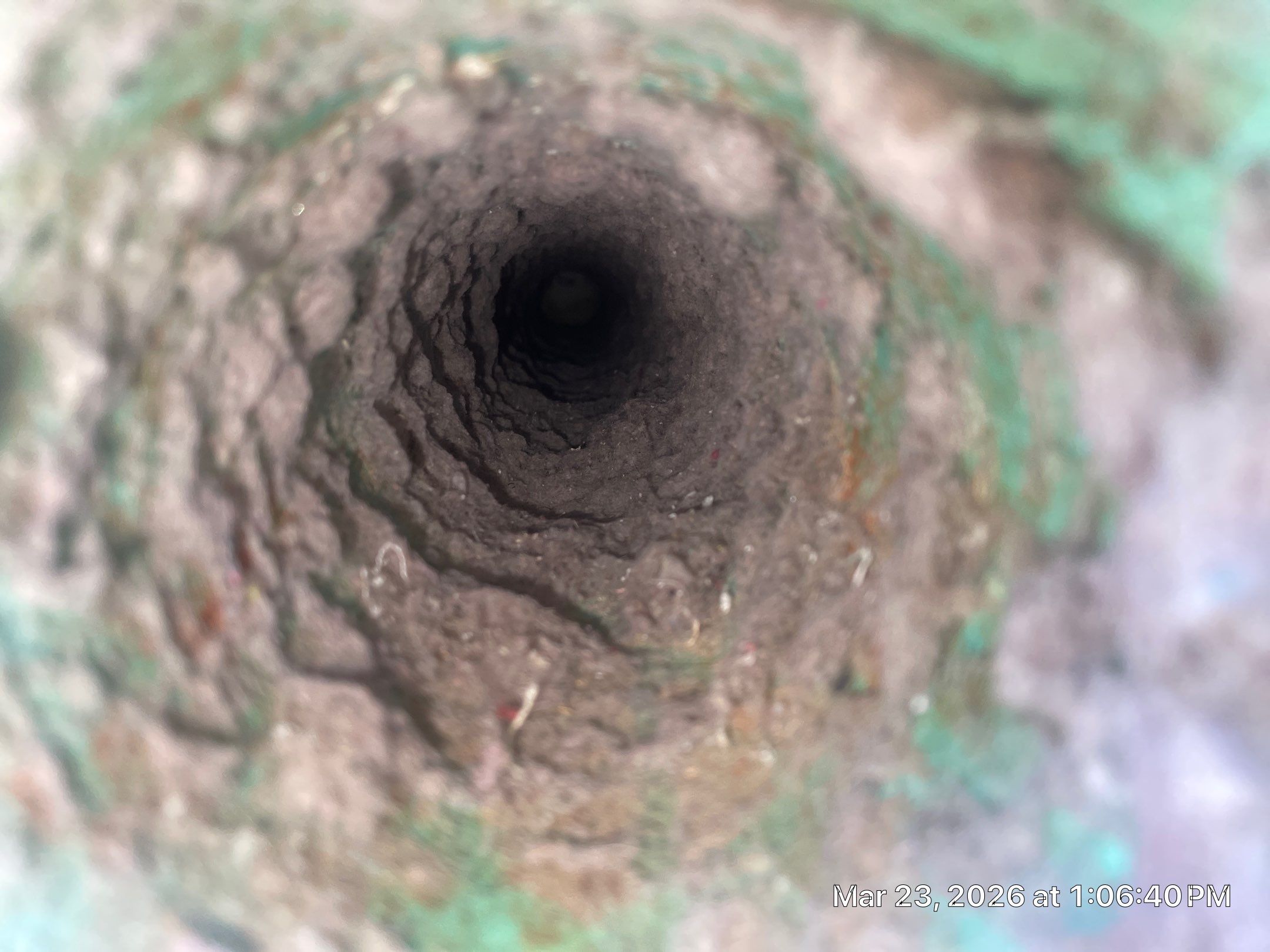
What We Actually Find Inside Dryer Vents
These are the conditions we see in real Chattahoochee Valley homes.
Lint Logs
Compressed lint forming solid plugs along the run. A partial clog forces the dryer to run longer; a full plug is a fire waiting for the right temperature.
Crushed Transitions
Flex pinched behind the dryer at install — lint stalls at the bend on day one. A crushed transition is one of the most common and most preventable fire risks we find.
Blocked Exterior Cap
Cap full of lint, sometimes with a mesh screen turning it into a lint trap at the highest back-pressure point in the system.
Bird Nest Debris
Spring-season nesting in caps without proper protection. Nesting material compresses the exit and holds heat inside the run.
Clogged Roof Vent
Roof cap with a grill in front of it — trapping lint at the exit, exactly where back-pressure peaks and temperatures climb fastest.
Undersized Vent
A 3-inch vent on a 4-inch dryer outlet — back-pressure by design. Restricted from the start, these vents clog faster and run hotter.
Why Mesh-Screen Vent Caps Are Dangerous
Mesh screens are sometimes added to vent caps to keep birds and pests out. They do exactly the opposite of what they're meant to do. The mesh traps lint at the exit point of the dryer vent — the precise location where back-pressure builds and ignition risk peaks. Code-compliant caps use a hinged or magnetic flap that opens fully when the dryer runs, then closes against pests. We replace mesh-screen caps as part of standard service when we find them.
Have Us Check Your CapCommon Questions
Dryer Vent Cleaning FAQ
Answers to the twelve questions homeowners ask us most often before scheduling.
Our Service Area
Dryer Vent Cleaning Across the Chattahoochee Valley
We clean dryer vents in homes across Columbus, Phenix City, Auburn, Opelika, Fort Moore, and surrounding communities.
Book Your Free Dryer Vent Inspection
One hour. One clear answer about whether your vent is safe. No pressure.
Charting your path to cleaner air • Columbus, GA • Phenix City, AL • Auburn, AL • Opelika, AL